
The map is not the territory
Photos by Wildcoast Photography
“The map is not the territory.” I couldn’t get Alfred Korzybski’s famous statement out of my head as I tried, failed, and tried again to heave my 65-pound fully loaded handmade rigid mountain bike over the rocks in front of me. One can know, in theory, the elevation gain and grade of a climb. However, the reality of actually doing the route is often a different experience than the information led you to believe. I was prepared for the Tour Divide to be the most difficult race I had ever signed up for. Yet it still surprised me when my second day on course turned into the hardest single day I’ve ever had riding a bicycle.
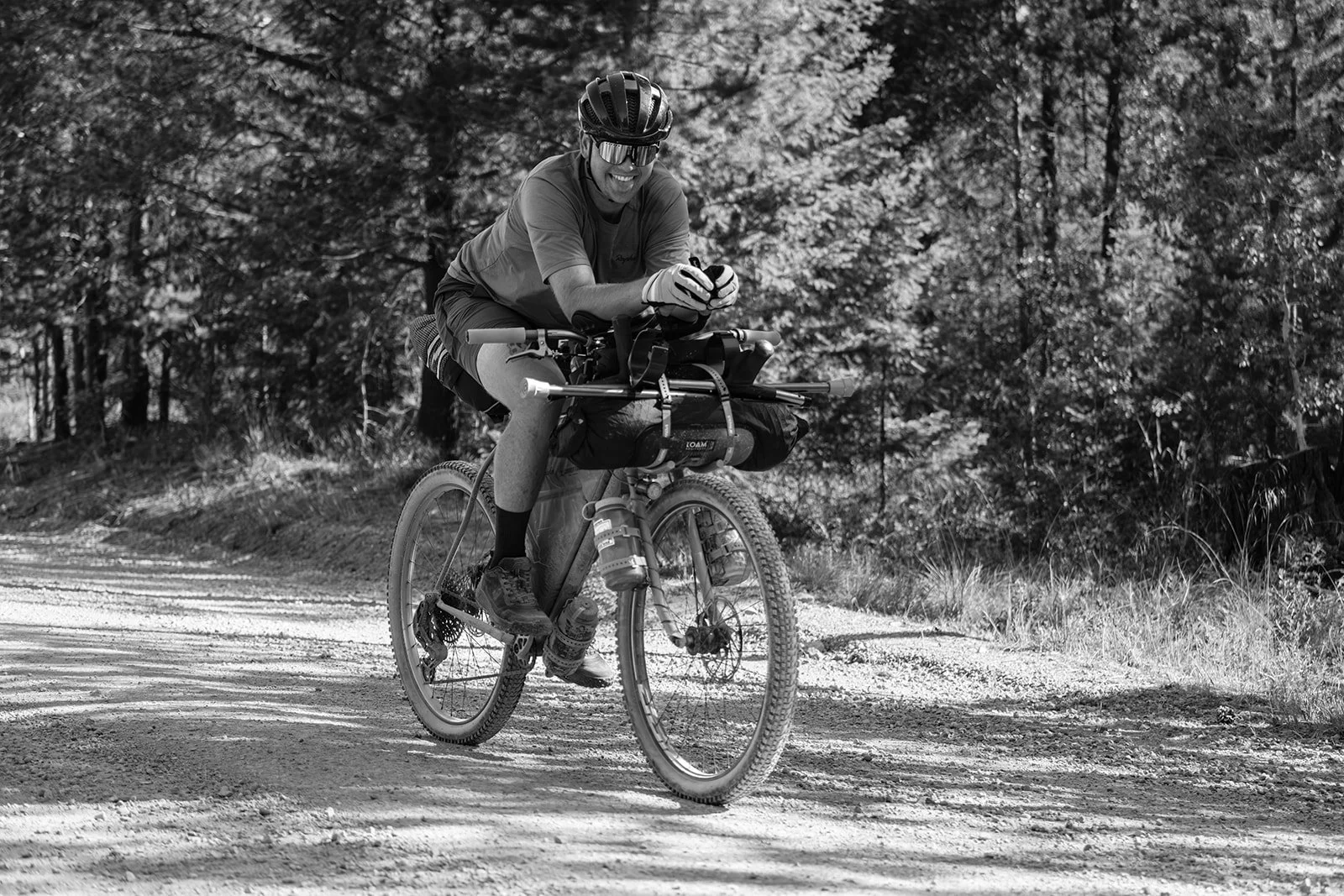
I woke up at sunrise and rode into Elkford, BC for a high-calorie gas station resupply; knowing the upcoming section of trail was often labeled the “most difficult” section of the race route. Though, what is toughest for any one rider is a matter of personal experience and whoever you ask will have their own story about their hardest. Approximately 100 miles (160 kilometers for you Canadians) into the Tour Divide, Koko Claims lives up to its reputation as a relentless and physically demanding hike-a-bike. Instead of taking the American Cycling Association’s official GDMBR—a gravel trail from Elkford to Fernie—the Tour Divide race turns west and goes straight up a mountain. Someone hiking Koko Claims might find themselves crawling rather than walking to occasionally manage the steep grade on large loose chunks of rock. This section of trail, more akin to a high-alpine scree field than a forest service road, is considered almost unbikable. Hiking is not something I consider myself very good at anymore, and this section of the race route worried me during my months of planning and research—I was certain it would be my personal hardest section, and in some ways it was
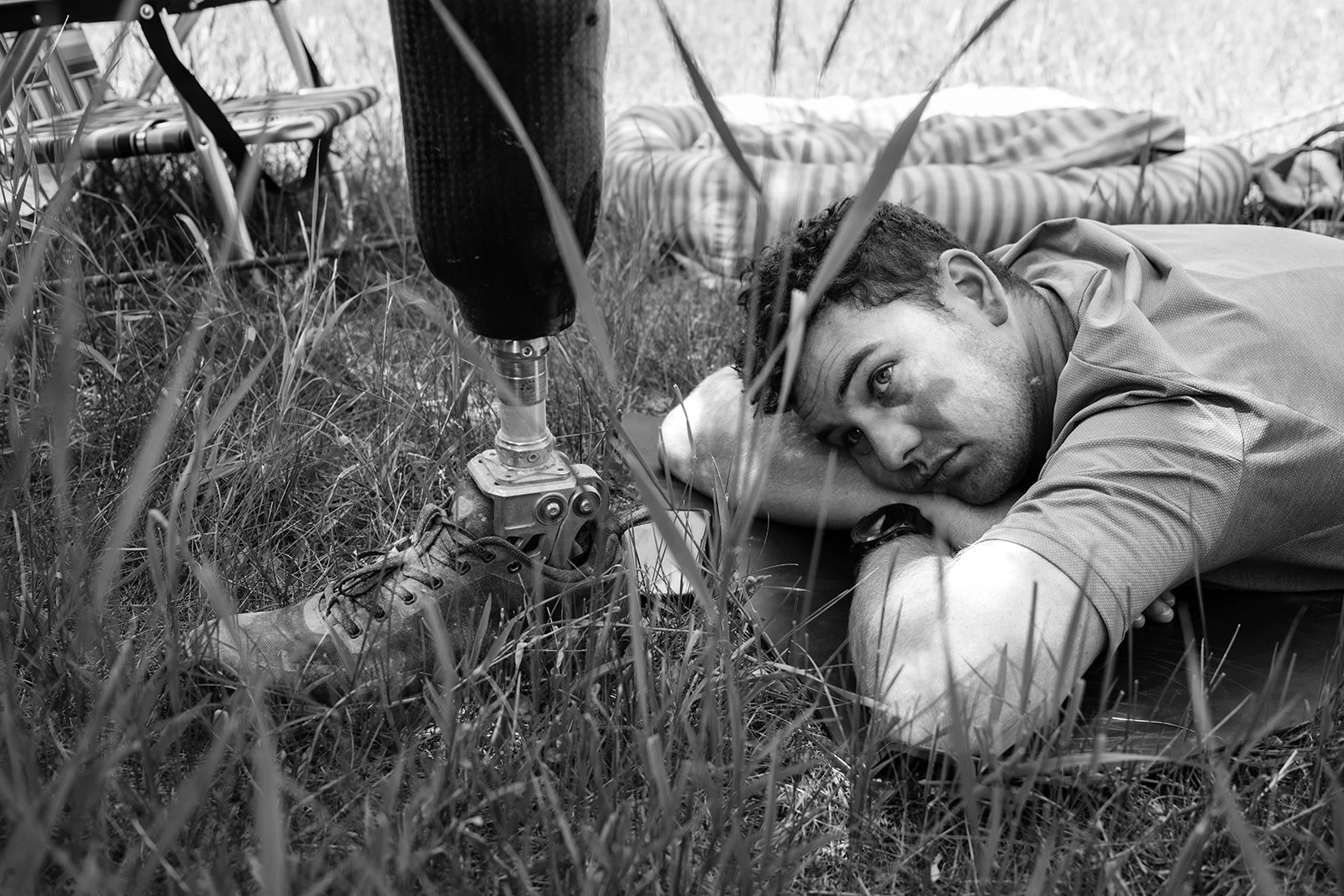
It is far more challenging for me to walk than it is to ride a bike. I am a below-knee amputee and use a prosthetic on days when my left leg is feeling good enough to fit into the socket. My wife refers to my time in a prosthetic as “active hours” and we try to make the most of them. Those active hours are often dedicated to cycling, but I also walk around the bike shop where I work part time, stores when I run errands, and our yard when playing with our dogs—all mostly flat, even surfaces. Wearing a prosthetic allows me to complete everyday tasks and enjoy a sense of normalcy in my life, but it will never be a true replacement for the ways my other ankle can move. I have no side-to-side articulation, which makes uneven surfaces extremely difficult to maneuver, but the easy rotation of a bike pedal is the closest I get to feeling like my old pre-amputation self. For all these reasons, I worried often about attempting a trail I knew meant walking many difficult miles.
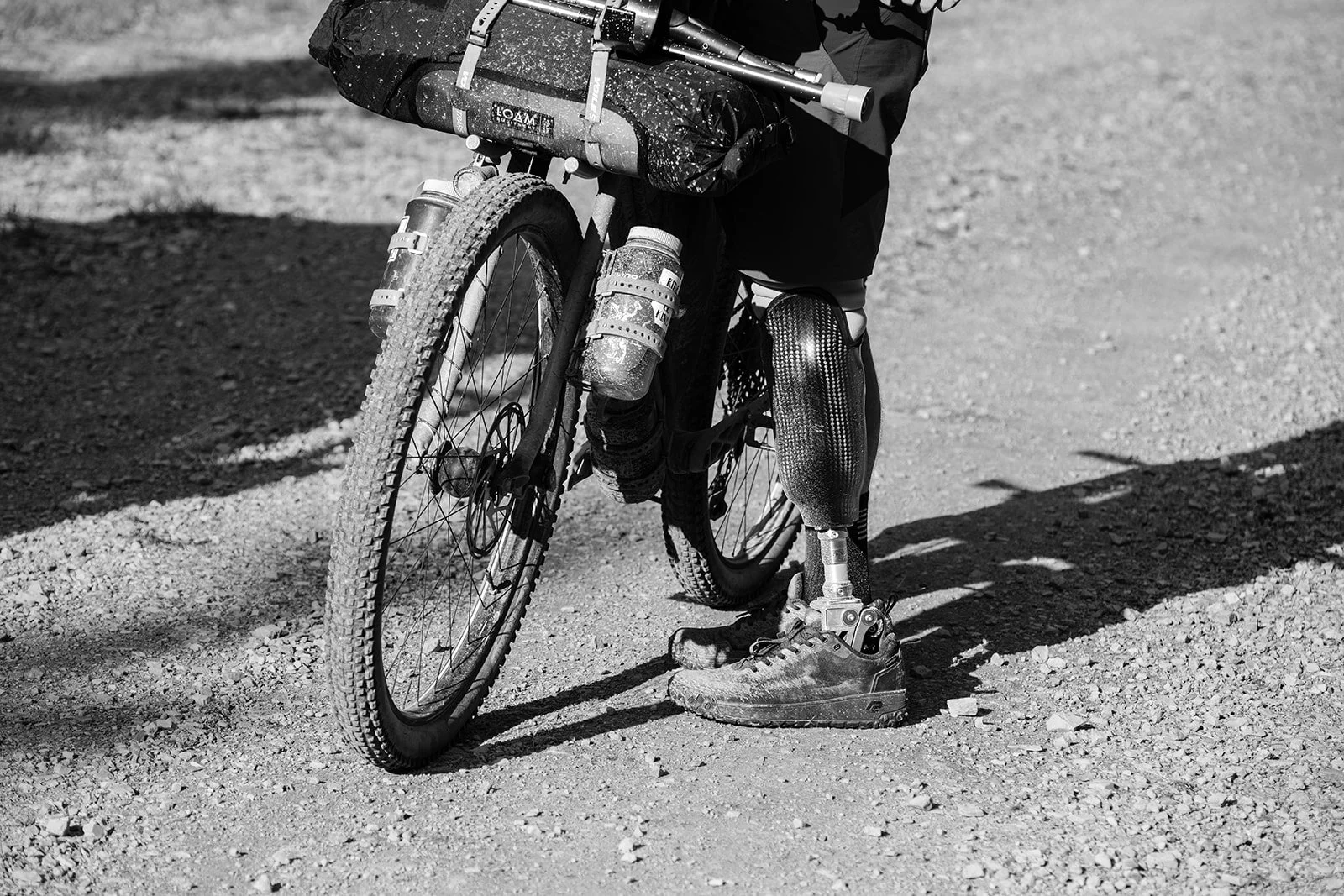
Prosthetics are incredible tools that allow folks with limb loss or limb difference to remain active, or become active, but no single prosthesis can mimic the variety of movements of the human body. Multiple prosthetics are necessary for an amputee to do multiple forms of movement. For example: running blades are a type of prosthetic foot that provide the upward spring-like ability to go for a jog, which is similar to what the muscles in a foot can do, but those blades are nearly impossible to walk in. A prosthetic for walking is much more comfortable to use on a daily basis, but running in one would risk breaking it because the same technology that makes it ideal for walking makes it wrong for running. In my experience, the most difficult task is walking on uneven surfaces. Going for a hike in a prosthetic can sometimes feel like walking in a ski boot. Luckily, I have an amazing healthcare team at home in Bellingham, WA at Cornerstone Prosthetics and Orthotics who helped me get off the couch, onto a bike, and now back into racing. Without their attention to detail and commitment to helping me achieve my goals there would have been no way I would have found myself confidently approaching Koko Claims on the second day of the Tour Divide.
“The map is not the territory.” I knew no amount of preparation could truly open my eyes to this experience ahead of time—I needed to feel each step, each pedal stroke, first-hand to be able to truly say that I know what lies ahead. That not knowing is where the fear lies, but it’s also where overconfidence can shadow reality. A huge part of preparing for Tour Divide as an amputee was avoiding overuse injuries, and the massive day to day changes that happen in a residual limb meant I could have attempted a similar trail one day and yet my prosthetic might have felt totally different during the Tour Divide. I wouldn’t say I went into this race blindly—no, I watched all the videos, read all the blogs, and consumed as much content as I could—yet it was impossible to know if my disability would hold me back until I actually did it.
Koko Claims is fucked up, and one of the best things I’ve ever done for myself as an amputee. When I finally made it to the top of the climb, it wasn’t pride I felt. Instead, I felt relief. Relief that I had not damaged my prosthetic, or my body, in that absurd effort. It took me ten and a half hours to go 80 miles that day. It was only once I crossed the Elk River into Fernie that I felt anything resembling pride. All my matches had been burned exploring this territory that I had studied so many times on the map. It was time for a burrito and a deep sleep. The next day, I felt ready to take on the world. It felt as though by accomplishing what I thought would be my personal hardest, I was just one more effort away from the finish line in Antelope Wells, NM. I knew there was another infamously steep trail in my near future, because I knew the map so well. Yet I found solace in not truly knowing what lay ahead. “The map is not the territory.” It was time to replace the two-dimensional image of this map in my mind—it was time to see the territory.
Waking up at sunrise on my third day of Tour Divide, I felt as though I had unlocked something inside myself—a confidence I’d lost after losing my foot. Overnight I became the adventure-loving cyclist of my past. Disability or not, I was racing the Tour Divide. Mile after mile of stunning scenery unfolded in front of me over the next two days. It was blissful. The feedback I received from my body told me I had been riding my bike hard for many days, but I could keep going. Then, I got to Whitefish, MT.
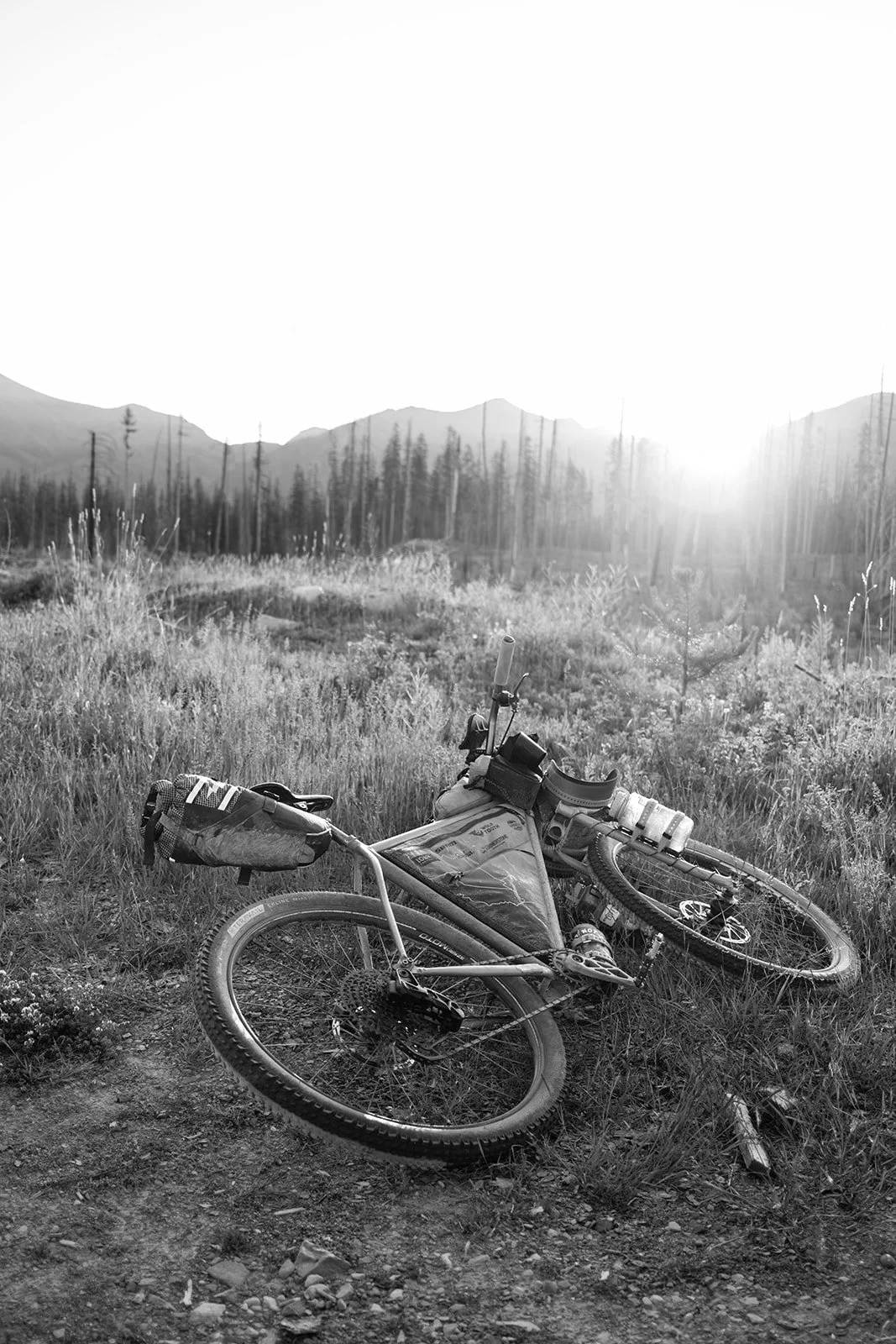
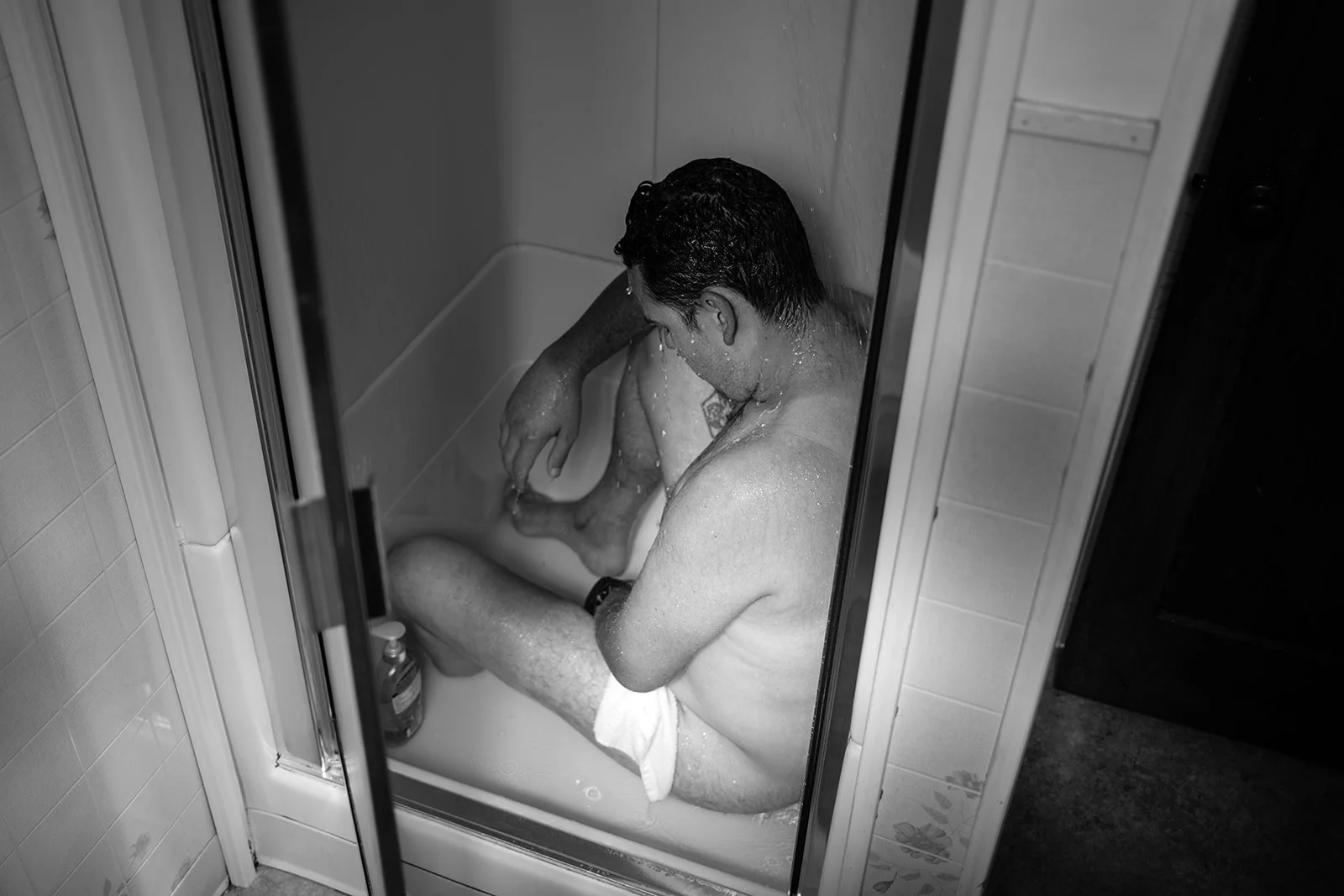
It was a near-perfect day. I was stoked—I wanted to push on to the next town, or even beyond. However, when I stopped early in the evening for dinner, my residual limb became extraordinarily upset. I sat down at a cafe with a fellow racer—we were mutually bemoaning the laziness of the official GPS race route while we scarfed down real food—and when I got up from my seat the back of my left knee, which interacts with the hard edge of my prosthetic, was swollen. I knew I needed to stay in Whitefish that evening. I booked a hotel for comfort and cleanliness, and took a much-needed shower. Without my at-home accommodations, I crawled across the bathroom floor and craned my neck around to see what the back of my left leg looked like. I saw what I hoped were only mild pressure sores, which are unfortunately common occurrences for endurance athletes who wear prosthetics. Spending all day in a silicone liner and solid carbon socket is the perfect recipe for upset skin. I cleaned the sores as best I could and went to bed hoping it would look better in the morning.
“The map is not the territory.” I’d studied this map too, the best I could—the what ifs of potential injuries as an amputee. I was in novel territory; attempting an ultra-endurance event no other prosthesis-user has yet completed. So no one in my months of preparation was able to offer insight into what I should expect. I woke up to find nasty puss-filled sores around my knee. After hours of fretting, googling, and reaching out to fellow amputees online, I decided to get back into the prosthetic. Only 10 easy miles from Columbia Falls, I knew the only way to see how it would feel to ride was to get back on my bike. I could either stay or go, but the outcome would likely be the same. Could I have done some things differently? Maybe. Do I regret continuing? No.
I made it to Columbia Falls in an hour. I felt more pain in those 10 easy miles than I had in 4 days traversing the Canadian Rockies. I decided to take a break and reassess. The pendulum swing was dizzying—just two days before I felt on top of the world, for the first time in nearly three years thinking that my physical disability no longer held me back from saying yes to adventures. The rest of my body felt amazing, strong, and ready to push onward. But my left leg, the part of my body I’d lost control over when it was ripped apart, was holding me back.
A major problem I run into while wearing a prosthetic is the liner that allows my body to interface with the prosthetic itself. There are a few different attachment styles out there, but they all revolve around wearing a silicone sleeve over the residual limb. I’m sweaty, always have been, and I detest the claustrophobic feeling of my leg spending all day in a contraption that doesn’t breathe. Pulling off that liner after riding all day leaves a pool of my own sweat poured out on the ground. Right now, there is no way for me to wear a prosthetic socket without a liner. Sweat management is a tricky thing for those with limb differences, even those who are not particularly active. Racing for days, in the summer heat, on dusty trails—those liners become pretty disgusting. Add camping to the mix and you’ve got a recipe for potential problems—microbes love dark, warm and moist conditions. Cleanliness is key to keeping one’s residual limb healthy. I spent the day in Columbia Falls out of my liner, to give my skin a chance to breathe, and keep my leg clean.
The next morning, things looked pretty good. Swelling decreased, and the sores were no longer purulent. The broom wagon had now passed me, but I maintained high hopes I would still make it to the finish line even if I were a day or two behind my goal. Off I went into the beautiful Montana wilderness.
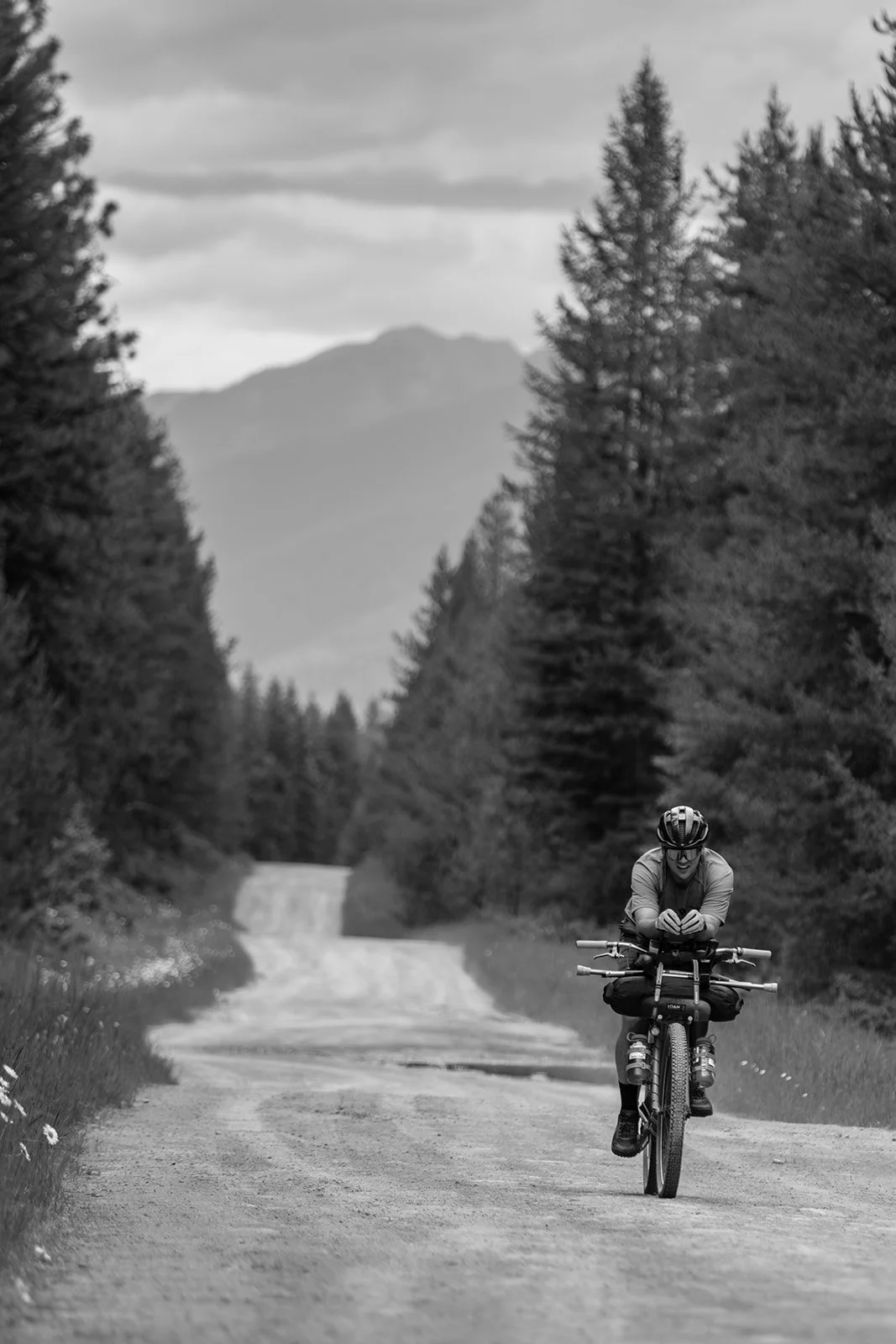
My leg did not feel great but I chugged along regardless. In fact, I was making good time and the pain was minimal. At midday I stopped for lunch and removed my prosthetic to air out the skin. When I finished my thawed out microwave burrito and started to put my prosthetic back on, I screamed so loud from pain it scared me. Where did that come from? Being out of the hard shell of the prosthetic socket had allowed my leg to swell, and trying to squeeze back in was extraordinarily painful. What do I do now?
I was somewhere between Columbia Falls and Seeley Lake, I had cycled past three grizzlies in the last 15 miles, and I had no cell service. Do I turn around and try to make it back or do I keep pushing? I was over 50 miles from Columbia Falls along the race route, so it seemed wisest to keep moving south. I figured, if things got really bad I could hop on highway 83 for a straight shot into the next town, but even that option was still at least 20 miles away. Moving forward felt logically right, but I also despised the idea of turning around.
“The map is not the territory.” My perception of the trail in front of me changed when things started hurting. Riding here, contending with fears brought forward by the pain, in a place I’d fought so hard to witness, was brutal. You aren’t able to do this. You are going to lose what is left of your leg because of this. You have failed. These thoughts were hard to keep at bay when every pedal stroke caused fierce pain. Around 5 p.m. and eighty miles into day five, I came to a junction—left toward the highway, or right to stay in the race. At that moment of indecision, my wife rolled up in her jeep with our husky whining excitedly hanging his head out the passenger window. She had hoped to meet me in Helena the next day for a coffee and check-in. After reading my messages describing the sores on my knee, she decided to come find me on course in case I needed help. A damn good thing too, because I needed help.
The Tour Divide is an officially unsanctioned event in which folks race, unsupported and alone, from Banff, Alberta to Antelope Wells, New Mexico through the Rocky Mountains. Over the years, there has been quite a lot of drama in the bikepacking community regarding what does and does not constitute support. The Tour Divide attempts to outline a definition of unsupported racing within the official rules, but the website (which has not been updated since 2014) contradicts itself and deviates from the race as it exists in 2025. While that leaves room for interpretation, it also provides fodder for arguments that have filled the comment sections on many forums. It is pretty widely agreed that racers can accept trail magic from strangers, and purchase whatever they may need along the route from publicly available venues like shops and restaurants. If you happen to have a friend who lives along the route, you’re barred from sleeping on their couch unless they open up their house to all racers on Tour Divide. Friends and family are not allowed to visit with racers in-person, as that constitutes emotional support, but as of yet there are no clear restrictions on communication in other ways. One of the most infamous points of contention in recent years has been the question of whether a film crew or media team counts as “support.” Famous riders like Lael Wilcox and Lachlan Morton have been caught up in these controversies despite their media teams maintaining a hands-off policy. Is it support if these film crews don’t do anything to make the ride easier for the racers? My wife and I talked a lot about how Lael was harassed online because her wife was on her film crew, and we joked often that having family nearby during a race sounds more like a detriment than a performance enhancement. I can’t speak for anyone else, but I’m more likely to hang longer at breakfast if my loved ones are there to talk to. Interestingly, these races have zero rules against performance enhancing drugs, but that’s a conversation for another day.
Having my wife show up on course is against the spirit of Tour Divide according to many race veterans. However, as an amputee, I require a lot more tools and specialized medical care than the average able-bodied cyclist. I hoped to race utilizing the bare minimum, so I could carry everything myself and abide by the rules. However, at home on a day-to-day basis I use nearly 25 lbs of mobility aids—all of which are bulky, awkward to carry, and don’t pack down at all. I left my crutches, secondary prosthetic, shower stool (so I don’t have to sit on the floor), and deep-cleaning supplies behind. My rebellious wife said, “fuck the rules,” and packed my gear into the back of her jeep just in case. With the sores on my leg clearly forming from repeated use of just one of my many medically-prescribed mobility aids, I was undeniably thankful to have access to others.
When you sign up to race Tour Divide, you sign an agreement. This is an excerpt from the form all racers fill out to register their GPS tracker on Trackleaders, “The difficult question is whether this ~20-30% touring category at the back of the TD pack are making a mockery of the feats for which riders at the sharp end of the racing are turning themselves inside out(?) Many TD veterans answer yes, and stress the casual attitude by at the back towards the TD rules (including pace, but especially self-support ethos) doesn't belong on the race map.” If you had to read that a few times to make heads or tails of it, don’t worry. Between the lines of unedited grammatical errors is the heart of a toxic race culture that suggests the back of the pack are making a mockery of this event. To imply that slower riders are inherently unworthy of participating is rude, but let’s dig deeper into why self-supported racing needs clearer, more inclusive rules, so shame and online harassment can stop being the mainstream methods for communicating standards.
There is a very vocal minority who flock to online forums discussing Tour Divide who think racers at the back of the pack “are making a mockery” of the efforts of those at the front of the race. Frankly, those people can fuck right off. The incredible accomplishments of Tour Divide winners are worth celebrating, and the only thing reducing the enormity of those achievements is the toxic culture of negative discourse that aims to belittle anyone who doesn’t conform to outdated ideas of what it looks like to be a cyclist. Why is this discourse being justified within the bikepacking community? The successes of riders at the front of the pack will inspire those behind them. Their wins are no less impressive if the starting line has 1000 people of various backgrounds and abilities, or if only those deemed “genuine contenders” for a title are present when the metaphorical gun goes off. The Tour Divide is a race route that has for many years deviated from the recreational GDMBR route, and that’s what differentiates a racer from a casual tourist. If a rider follows the rules to the best of their abilities in a safe manner, completes the race route as it is published by the Tour Divide organizers, and arrives in Antelope Wells, they’re a Tour Divide finisher. Those who argue otherwise and claim that racing must be done at a certain pace are just trying to be exclusionary.
At this point I hope you’re asking yourself, “what are these rules?” Unfortunately, that is very difficult to answer. That form I pulled the above excerpt from has vague guidelines, but mentions multiple times that maintaining “the spirit of the race” is the most important rule. Lifelong theological scholars have a hard enough time agreeing on the “spirit” of a published religious doctrine; how the heck are a bunch of bikepackers supposed to keep the “spirit” of a race alive when the official rules page was last updated over a decade ago and contradicts itself?
At the start of the 2025 Tour Divide, I and others spoke to onlookers present at the grand depart who uttered some version of, “the rules are really only there for the real racers.” Yet every cyclist I met on course was trying their hardest to follow the rules of self-support no matter their pace. Until someone defines what the Tour Divide “spirit” is, there will always be a communication breakdown. Tour Divide racers deserve clear, applicable, modern rules that can be followed, and they deserve to be treated with respect as they participate. There are hundreds of people who sign up for the Tour Divide every year. Not because they want to water down the race, they want to participate in the race and maybe even finish. There are hundreds more who go on to tour the GDMBR at their own pace, following their own rules.
The idea of support is clearly the concept more contested within Tour Divide race discussion. Folks will say, “there is no team category, so don’t ride with anyone else.” I have voiced in personal discussion multiple times that I think there could be a para-cycling category that is ADA-compliant, and have either received support or pushback on the idea. One person responded that if I was allowed ADA-compliant medical support then suddenly everyone who needed a little help would argue for it and suddenly the race categories would mean nothing. I pointed out that there's a dog-packing category and that it seems very telling that disability accommodations are deemed less important than opening up the race to other rider groups.
I am not arguing against the spirit of a self-supported race or bringing your furry friends along for the ride. On the contrary, I think it should be more well-defined and those definitions should be equitable. If the bikepacking community decides moral support from family is against the rules, should racers be allowed to call their partners to say goodnight? Can they make phone calls, but not video calls? If seeing someone’s face on the sidelines is too uplifting, is a video call against the “spirit” of the race? If you are going to have rules, then have rules. This race is either organized or it is not.
The current rules that supposedly keep the “spirit” of the Tour Divide alive are not equitable by any stretch of the imagination. Racers are discouraged from riding together at all. Why is that? There are plenty of stretches of this beautiful country where folks who aren’t cis white men do not feel safe traveling alone, and for good reason. If otherwise self-supported racers are not allowed to ride together through these remote stretches of land, that feels like the “spirit” of this race is gatekeeping. In recent years, riders began voicing concerns that predators are aware of women riding alone via this route, and racers have begun to warn each other of nearby dangerous people. Not worrying about these things—that’s a privilege. To reiterate an online discussion in a very visceral and real way as I cycled through grizzly country—there’s a reason many people are more scared of dangerous men than they are of bears.
“The map is not the territory.” On a map, a town can look like a perfectly safe space, especially when compared to the wild landscapes a Tour Divide racer passes through. However, the lived experience of being yourself in territory can be something altogether more sinister. While these cute little towns we pass through are beacons of comfort to some participants, others are unable to ignore the history of said town for their own safety. Nowadays you might see a MAGA flag, but in the not-so-distant past, these same communities were known as sundown towns. There are resources out there that track this sort of history, and unfortunately a map of sundown towns does overlap with the Tour Divide race route. It is absurd to ban racers from riding together for a greater sense of safety when there is such hatred present in places we pass through. If you’ve never had to consider these things, that’s a privilege. Having a more diverse group of riders come together to rewrite the rules of the Tour Divide, not to make it easier but to make it equitable, would go a long way toward removing a barrier to entry that isn’t about athleticism as much as it is about discrimination.
The other rule embedded deep into the spirit of a self-supported race is not accepting free accommodations from friends or a connection that isn’t available to other racers. But, you’re allowed to rack up charges on your credit card and stay in hotels along the way. It’s fair to say that this offers an unfair advantage to those who are able to carry less, stay cleaner, and sleep on a real mattress. Don’t get me wrong, I did that. As an amputee I prioritized cleanliness over cost savings, even though I did ride with a full sleep system on my bike. Those who are unable to afford hotel rooms are at a distinct athletic disadvantage. Tour Divide spectators and some participants fetishize lack of sleep in ultra-endurance events, but it is clear that winners do try to sleep and eat well. If you want to win this race, you need to take care of yourself and give your body the rest and fuel it needs. If you want to be hailed as a hard core cyclist for putting yourself at risk by riding days on end with no sleep, go ahead. No one is stopping you. Just don’t deny that those with more money and resources are inherently capable of racing the Tour Divide with greater ease. Financial advantage benefits certain riders in every decision—they don’t have to take the time to compare which gas station protein bar has more grams of protein per cent, and they don’t have to worry if they can afford breakfast when the last hotel room available in town is the king suite.
Look, I’m not dogging the folks who can afford nicer things. They have lighter bikes and ultralight sleep systems—good for them! But arguing that the rules as they are written provide equality amongst racers is false. There is more inequity amongst Tour Divide racers now than there has ever been. Maintaining the same set of rules that kept things fair amongst the first Tour Divide finishers—a group of mostly young to middle-aged, white, able-bodied men—doesn’t work anymore.
“The map is not the territory.” Now, to be quite literal, there were so many instances where the map of the official route given to racers this year was a poor representation of the territory. Many points on the official route were connected as the crow flies, instead of following the actual paths. Many racers I spoke to on course expressed justified frustration over this. If one of the cardinal rules of the race is not to deviate from the official route, then it should align with the organizers’ strategy to provide an accurate map. It wasn’t fun to be tired after a hundred miles, riding in the dark, and suddenly hear the dings from my GPS stating I had gone off course. Only to then stop, look at the map, and realize that the next course marker was dropped off-trail and in the middle of the river. I certainly wasted minutes circling back around to look for a turn that wasn’t there a few times.
The Tour Divide rules, and their inequities, were swirling around in my head as I repeatedly thought, “I’m cheating,” when my wife picked me up to go to the hospital. I felt defeated, not just because I was leaving the race course, but because I had failed to follow the rules. What was the point of doing the Tour Divide race “by the book” anyway? I wanted to prove something to anyone who would pay attention: access to prosthetics care is vital to an equitable world. I was racing for a reason, and trying to use the minor attention I got as an amputee cyclist to raise money for a non-profit I believe in: the Range of Motion Project (ROMP). Their mission to provide prosthetics care to underserved communities in Central and South America is so important. ROMP provides prosthetics care to thousands of folks who, like me, are missing a limb. The difference between myself and a ROMP recipient is that I have the privilege of access to quality health insurance that pays for these expensive prosthetics. As such, I wanted to prove to myself that this access to prosthetics care is all I needed to be able to do what I used to be able to do when I had two feet—ride my bike as long and as far as I wanted. As I laid there in the emergency department of the hospital in Missoula, waiting to be seen by a doctor, I felt I had already achieved my goal. Abiding by the rules of the Tour Divide, I had conquered trails harder than I had ever ridden as an amputee, up and down both Koko Claims and The Wall. I rode hundreds of miles along this grueling yet beautiful race course, which is farther than some able-bodied folks went this year. If that effort didn’t prove how important prosthetics care is, what would 2000 more miles do?
It was a simultaneously cynical and freeing thought. I’ve made my point. I couldn’t do this without a prosthetic. But it went farther than that. I realized I could do this with a prosthetic. I could complete this whole race, with the right gear. The only thing holding me back was access to specialized care along the way. Maybe next time I’ll go slower, but I’ll certainly have help. I can do this in a prosthetic, but not with these rules. Perhaps someone else can, but that is not in the cards for me. Am I making a mockery of the athletes I look up to who have set records, raced at an incredibly fast pace, and finished in only weeks what I planned to do in a month? No, I don’t think so. I hope to one day be amongst their ranks as a Tour Divide finisher, not a winner. For me, and most racers, it’s not about winning. Self-supported bikepacking and racing is all about proving to yourself what you’re capable of and even inspiring others along the way, maybe doing some good with your miles too. So it’s time for something new. This is uncharted territory indeed.
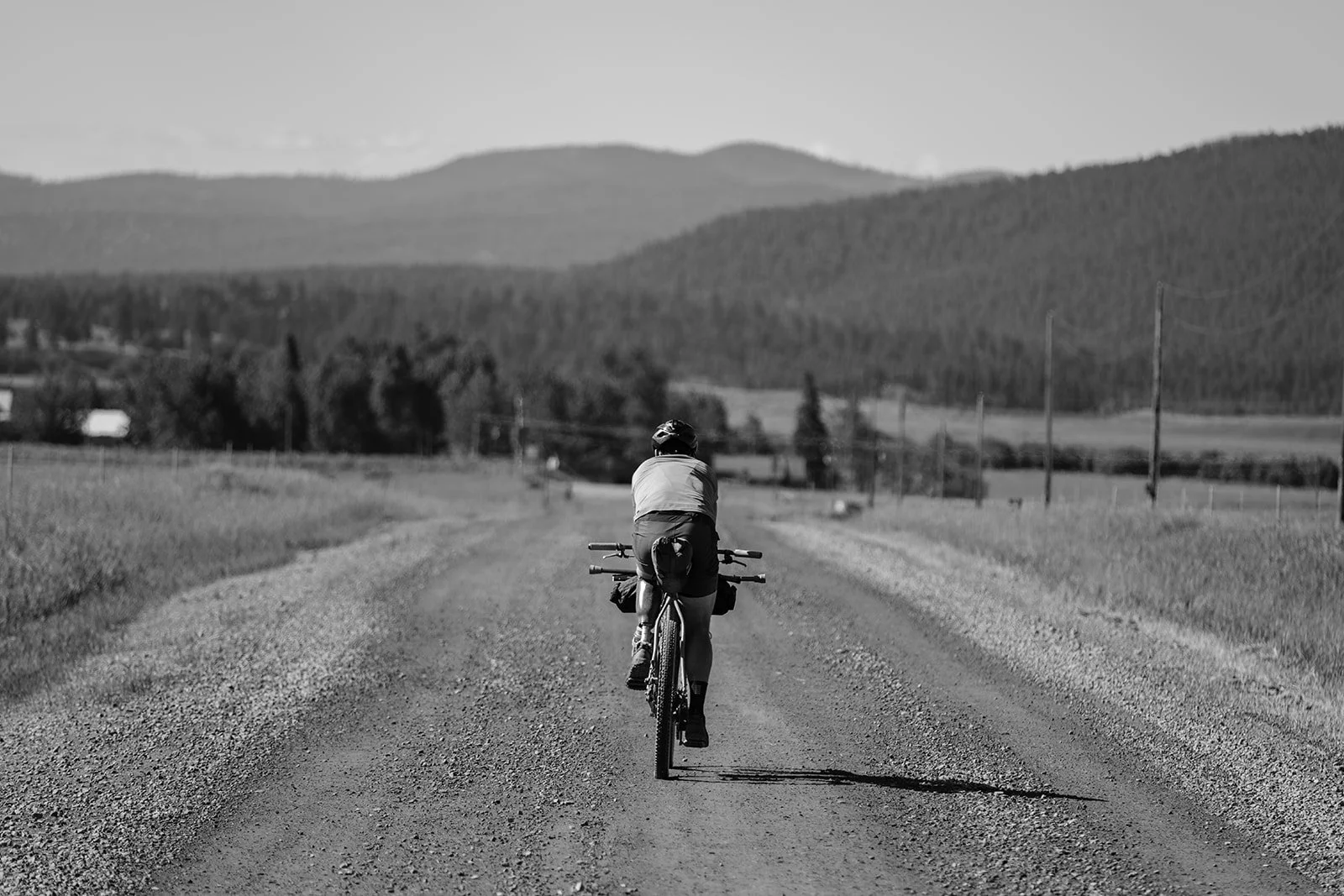
Perhaps it was time to become a cartographer. This map I had studied for so long was misleading me in this novel territory. Should I write my own rules? Would my map be more helpful to others like me in this territory?
What is it to be an adaptive athlete? I’m still trying to figure out exactly what my answer is. I’ve spoken to many other adaptive athletes, across a multitude of sports, and everyone has their own reasoning for pushing themselves to go farther, be faster, and get stronger. For myself, I’m still learning what it is to be an amputee. Three years in and I certainly feel like a toddler just getting my legs under me, literally and figuratively. Disability is a club few members expected to join, and I was certainly surprised to find myself here. But my welcome party left a lasting impact—adaptive athletes have been the most supportive, loving, encouraging community I’ve ever known. We’re all fighting our own battles on a daily basis, so maybe there’s little vitriol left for each other. But I don’t think that’s the reason. It’s more positive than that. Having to adapt, daily, opens my eyes wider to the inequities of this world. It’s simply more obvious than ever before when something ought to change. In turn, that creates a deep empathy and appreciation for the efforts of folks who aim to make this world better for everyone. There are plenty of instances where increasing access for those who need it results in a better experience for all involved. Adapting an event to make it possible for all who want to participate will not ruin or make a mockery of the experience for those at the front of the pack, and will not diminish the success of winners who worked hard to prove themselves.
Why am I challenging the cycling community to modernize the Tour Divide race rules to be more inclusive? Why not just start a new race? Inclusivity should not be a smaller, fringe event. Tour Divide is the gold standard for bikepacking events in the United States, and it is hailed as a world-renowned race that people from dozens of countries participate in every year. It has already been at the forefront of conversations around standards for what it means to be self-supported, what it means to be a competitive endurance cyclist, and who determines who holds the records for fastest known times. Let’s clean up the rules, remove contradictions, align the language to abide by accepted standards of non-discrimination, and create new categories. Why not have a self-supported category and a separate supported category? Other endurance world records do that. The adventurous “spirit” of the Tour Divide can be maintained as we, the cycling community, take this race into the future.
I dropped out of the 2025 Tour Divide after 670 miles. I took nine days off in the middle of my effort to go to the hospital and receive essential medical support, and then I was dropped back off at that exact same trail junction and went for three more days. Some may say I broke the rules by leaving with my wife instead of a stranger, but that seems like a really odd way to interpret the rules. The Tour Divide is no longer a dozen friends meeting up in Banff on the second Friday of June. The hundreds of cyclists who participated this year will be followed by hundreds more next year. These racers deserve a clear set of rules to follow, which are easy to enforce as a community without relying on shame and online harassment. Tour Divide participants deserve to find themselves amidst a community atmosphere that encourages individual bests in this stunning region of the world regardless of their anticipated finish times. There is a disconnect between those who “organize” this event and those who participate, and when the leadership no longer represents the people it is time for revolution.